

Why Title Fraud Is Escalating and How to Avoid It
In today’s increasingly digital real estate environment, title fraud is emerging as one of the fastest-growing threats to property owners, lenders, and title companies. As transactions move online and public records become more accessible, fraudsters are finding new ways to exploit vulnerabilities in documentation, identity verification, and mortgage processing systems.
For businesses operating in real estate support and mortgage services, understanding the mechanics of title fraud and implementing effective title fraud prevention strategies is critical to protecting clients, reputations, and operational stability.
Key Takeaways
- The Threat: Title fraud is rising due to digital record accessibility and identity theft.
- The Targets: Vacant properties, elderly homeowners, and high-equity estates.
- The Solution: Layered identity verification, consistent record monitoring, and specialized BPO oversight to catch discrepancies early.
What Is Title Fraud and Why Is It Rising?
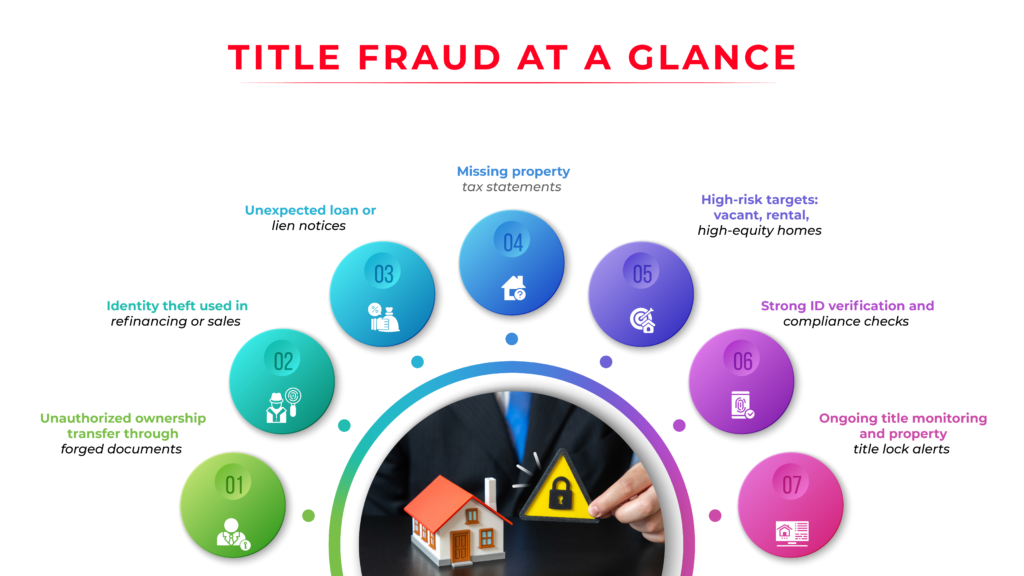
Title fraud, also known as title theft, occurs when a criminal illegally transfers ownership of a property into their name without the owner’s knowledge. Once the transfer is complete, the fraudster may attempt to sell the property, refinance it, or secure loans against it.
Several factors are driving the increase in property fraud:
- Easy access to digital property records
- Remote closings and online notarization
- Widespread identity theft from data breaches
- Weak verification controls in mortgage processing
Mortgage fraud schemes often overlap with title fraud, using forged deeds, impersonation tactics, and falsified lien releases to exploit procedural gaps.
The Real-World Impact of Property Fraud
The consequences of title theft extend beyond financial loss. Property owners may face lengthy legal disputes to restore ownership rights. Lenders risk issuing loans against fraudulently transferred assets. Title companies may suffer reputational damage and potential liability exposure.
Operationally, investigating property fraud requires document audits, lien tracking, compliance reviews, and historical ownership verification. Without structured oversight, these cases can drain internal resources and increase regulatory risk.
This is where disciplined process management and specialized BPO company oversight play a crucial role in title fraud prevention.
How to Strengthen Title Fraud Prevention
Preventing title fraud requires a structured and proactive approach.
1. Multi-Layer Identity Verification
Verification should include cross-checking public records, validating ownership history, reviewing signatures, and confirming borrower identity at multiple checkpoints.
2. Continuous Record Monitoring
Routine monitoring of public filings helps detect unauthorized changes early. Property title lock services can provide alert-based monitoring, reducing response time if discrepancies arise.
3. Enhanced Mortgage Fraud Controls
Loan origination and refinancing workflows should include layered documentation review, employment validation, and audit trails to prevent mortgage fraud from slipping through.
4. Dedicated Quality Control Teams
Specialized BPO support introduces structured compliance audits, standardized review protocols, and consistent documentation checks that strengthen fraud detection efforts.
5. Secure Digital Infrastructure
Encryption, restricted system access, and secure data handling are essential to prevent document tampering and unauthorized record manipulation.
Protect Your Portfolio Today
Don’t wait for a title dispute to reveal weaknesses in your verification process. Title fraud is escalating, and reactive measures are no longer enough.
Contact the Invisia team today to learn how our specialized mortgage and title support services can fortify your operations against fraud, strengthen compliance controls, and enhance title fraud prevention across your portfolio.