
How to Speed Up Commitment Typing to Prevent Closing Delays
In the B2B industry, especially in sectors such as mortgage lending and financial services, every second counts when it comes to closing deals. One of the major culprits that can cause unnecessary delays is slow commitment typing. If you’re unfamiliar with the term, commitment typing refers to the process of drafting and finalizing a mortgage commitment letter or any similar document. When this process is slow, it has a direct impact on your ability to close deals on time, which could lead to frustrated clients, missed opportunities, and even loss of business.
This blog explores how you can speed up the commitment typing process, ensuring smoother, quicker closings. We’ll dive deep into strategies like automation, using templates, and implementing a robust quality control system. So, if you want to boost your operational efficiency, keep reading.
What Is Commitment Typing?
Commitment typing is a process where a lender or financial institution types up a commitment letter. This letter outlines the terms of a loan or agreement between the borrower and lender. It contains essential details like the loan amount, interest rate, terms, and conditions. In mortgage lending, this commitment letter is critical as it sets the foundation for closing a deal.
However, typing these letters isn’t always straightforward. It involves ensuring accuracy in the details, which can sometimes make the process slow and cumbersome.
How Slow Commitment Typing Can Delay Closures?
It’s easy to overlook the impact that slow commitment typing can have on the entire closing process. Here’s how:
- Inaccurate Information: When typing commitment letters, there’s always the risk of entering incorrect or missing information. Fixing these mistakes often takes time, leading to delays in processing.
- Time-Consuming Manual Effort: Many professionals still rely on manual processes for typing mortgage commitment letters, which can be very slow. Every step, from verifying details to formatting the document correctly, eats up time.
- Back-and-Forth Corrections: Once a draft of the commitment letter is prepared, it often requires multiple rounds of review and corrections. This back-and-forth process contributes to even further delays.
- Lack of Standardization: In many companies, commitment letters aren’t standardized. When each letter requires a unique approach, this makes it harder to quickly finalize documents, increasing the risk of delays.
How to Speed Up Commitment Typing?
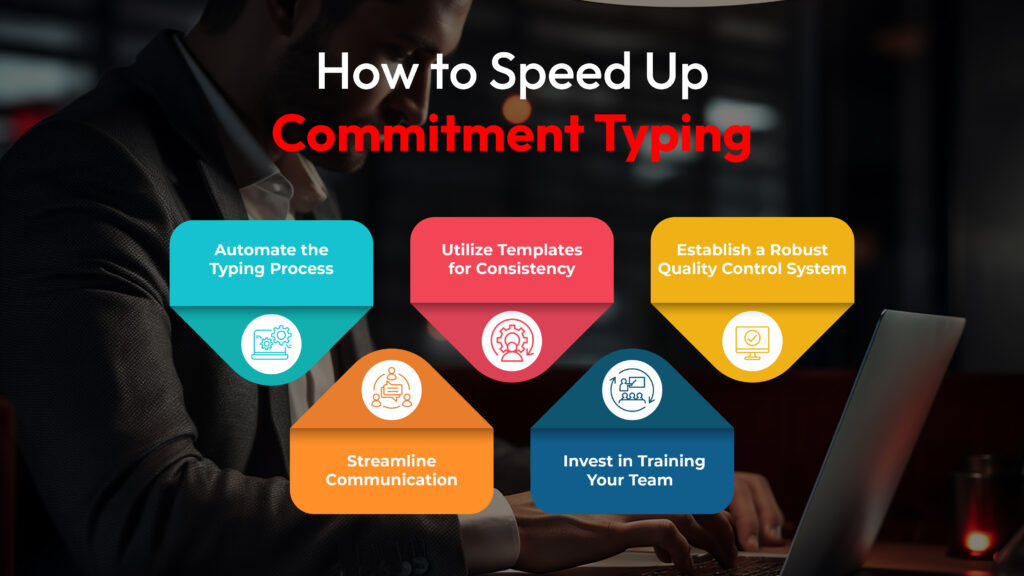
To prevent closing delays and keep your business running smoothly, you need to speed up the commitment typing process. Below are several practical strategies you can implement to achieve this.
1. Automate the Typing Process
Automation is a game changer in the B2B space, particularly when it comes to repetitive tasks like commitment typing. By automating portions of the process, you can save time and reduce human error.
What You Can Do:
- Use automated software that pulls borrower data directly from your CRM system to populate the commitment letter. This eliminates the need to manually enter borrower details.
- Automate the document formatting so that your commitment letters always look consistent and professional, saving time on manual adjustments.
- Leverage e-signature technology to streamline the signing process, preventing delays caused by manual signatures.
The more tasks you can automate, the faster the commitment typing will be, which in turn speeds up the entire closing process.
2. Utilize Templates for Consistency
Using standardized templates for commitment letters can significantly reduce the time spent on typing. These templates should be designed with the necessary fields that are commonly required for mortgage commitments.
What You Can Do:
- Create a template with pre-filled fields for the borrower’s name, loan amount, interest rate, and other common details.
- Include drop-down options for sections that need to be customized based on the specific loan agreement. This will speed up the process without sacrificing accuracy.
The use of templates allows your team to focus on filling in the unique details rather than starting from scratch every time.
3. Establish a Robust Quality Control System
When you speed up the commitment typing process, you may worry about reducing accuracy. However, quality control doesn’t need to slow down the process; it just needs to be efficient. Implementing a robust quality control system ensures that documents are error-free without dragging out the process.
What You Can Do:
- Use software that can automatically check for spelling, grammatical errors, and missing fields in your commitment letter.
- Implement a peer review system where each commitment letter is double-checked by a colleague before it’s sent out.
- Set clear guidelines for what constitutes a “complete” commitment letter, so you don’t have to waste time making multiple revisions.
A good quality control system ensures you can maintain accuracy while typing the commitment letter quickly.
4. Streamline Communication
Effective communication between your team members, underwriters, and other stakeholders can make a huge difference in how fast commitment typing happens. The fewer times the document needs to be reviewed and altered, the faster the process becomes.
What You Can Do:
- Use collaborative tools such as shared documents or project management software to streamline communication and approvals.
- Set clear deadlines for document revisions and approval steps. Everyone involved should know when they need to act and when they will receive the finalized commitment letter.
- Create a checklist that outlines the entire commitment process so that everyone is on the same page from start to finish.
Good communication can speed up each step of the process, reducing the likelihood of delays.
5. Invest in Training Your Team
Your team should be well-versed in the process of commitment typing to prevent slowdowns. Training ensures that everyone knows how to efficiently use the systems in place, whether it’s software, templates, or communication protocols.
What You Can Do:
- Regularly train your team on the latest tools and techniques for speeding up commitment typing.
- Hold refresher sessions to make sure everyone is up-to-date with changes to the process.
- Encourage your team to provide feedback on what works and what doesn’t in the current process.
An educated and well-trained team is much more likely to work efficiently, speeding up the entire commitment typing process.
Conclusion
Speeding up commitment typing is essential for preventing delays in the closing process. By automating tasks, using standardized templates, implementing quality control, improving communication, and training your team, you can ensure that your business runs more efficiently. Not only will this help you close deals faster, but it will also enhance the client experience and increase business profitability.
If you’re looking to take your business to the next level, consider adopting some or all of these strategies. Your team will thank you, and your clients will appreciate the quicker turnaround.
Partnering with an experienced business outsourcing provider like Invisia BPO can further accelerate commitment typing. Outsourcing allows your in-house team to focus on core operations while experts handle documentation efficiently, leveraging automation tools and standardized templates for consistent accuracy.